

Coastal villages, olive trees, Italian lemons and sun washed architecture can turn an ordinary wall into a small reminder of somewhere beautiful.
There are places that can make us feel nostalgic even before we have been there. The Mediterranean is one of them.
Perhaps it is the image of a quiet village resting above the sea. Perhaps it is an old stone arch covered by an olive tree, a table filled with lemons, or the warm evening light falling across a row of colorful houses. These images carry a feeling that is difficult to explain but easy to recognize.
It feels fresh. It feels warm. It feels slow. And for many people, it creates the irresistible feeling that one day, they would like to see it for themselves.
- The feeling of the Mediterranean coast
- Why coastal villages feel so timeless
- A little Amalfi through lemons and sunlight
- The quiet beauty of olive trees
- Mediterranean art beyond the beach
- Finding your Mediterranean decorating style
- The colors that make a room feel Mediterranean
- Where Mediterranean art works best
- Let the artwork tell your own story
- Frequently asked questions
The Mediterranean Coast Is a Feeling, Not Just a View
When people think about Mediterranean interiors, the sea is often the first image that comes to mind. But what makes the coast so memorable is not simply the color of the water.
It is the combination of sea and sunlight, pale buildings, natural stone, greenery and the relaxed rhythm of everyday life. The landscape feels bright without being harsh and colorful without feeling overwhelming.
This is why Mediterranean canvas art can work beautifully even in a home that is nowhere near the ocean. A carefully chosen landscape can introduce that sense of openness and sunlight without requiring a complete room makeover.
Why Mediterranean Coastal Villages Feel So Timeless
A coastal village tells a richer story than a simple picture of the sea. You see buildings, mountains, paths, windows, rooftops and the horizon all meeting in one scene.
That layered feeling gives the artwork a sense of place. It can make a living room feel like a quiet afternoon somewhere far away rather than simply looking decorated.

A peaceful landscape for the wall behind a sofa, bed or reading space.
If you prefer something quieter, a hand drawn village scene can bring the same sense of travel with a softer visual presence.

A lighter interpretation for calm bedrooms, entryways and minimalist coastal spaces.
A Little Amalfi Through Lemons and Sunlight
There is something almost impossible to separate from the Mediterranean imagination: lemons.
Along the Italian coast, citrus becomes part of the visual language of summer. Bright yellow fruit against white walls, blue water and warm stone creates a palette that feels instantly alive.
You can bring that feeling into a home without turning the room into a themed space. One lemon inspired artwork can be enough to introduce a little Italian sunshine.

Especially beautiful with warm white, cream, natural wood and subtle blue accents.
For kitchens and dining spaces, a fruit composition can feel even more natural. It connects the artwork with the everyday rituals of food, gathering and slow meals.

A simple way to bring citrus color and Mediterranean warmth into a kitchen or dining corner.
The Quiet Beauty of Olive Trees
Not every Mediterranean image needs to be bright and colorful. Some of the most beautiful interpretations are quiet.
Olive trees bring that quieter side of Mediterranean living to the wall. Their muted green leaves and weathered trunks suggest age, nature and a slower relationship with time.
They also have an advantage in home decor: olive green is remarkably easy to live with. It works with cream, beige, white, wood and terracotta without demanding attention from everything else in the room.

A natural choice for rustic, farmhouse and relaxed Mediterranean interiors.
Arches add another layer to the story. They make us think of old courtyards, shaded passageways and homes designed around sunlight and air.

An atmospheric choice for creating a quieter architectural corner at home.
Mediterranean Art Goes Beyond the Beach
One of the easiest mistakes with Mediterranean decor is assuming everything needs to show the sea. In reality, some of the strongest Mediterranean interiors are built around food, plants, architecture and everyday life.
Think of a kitchen with ceramic bowls, olive oil, fresh vegetables, lemons and an open window. The artwork does not need to announce that it is Mediterranean. It simply needs to carry the same warmth.

A vintage inspired composition that feels natural in kitchens, dining rooms and breakfast spaces.
This approach is especially useful if your home already has warm wood, traditional furniture or vintage details. Mediterranean art can blend into that atmosphere instead of forcing the room into a new theme.
Finding Your Mediterranean Decorating Style
Mediterranean style does not have one fixed appearance. The same coastal inspiration can feel rustic, modern, romantic, vintage or playful depending on the artwork and colors around it.
Modern Mediterranean
Keep the room simple with warm white, beige, natural wood and soft blue. Choose one large coastal artwork or a quiet architectural scene instead of filling the walls with nautical pieces.
Rustic Mediterranean
Bring in wood, terracotta, linen, olive green and vintage inspired artwork. Olive trees, arches and still life paintings work particularly well.
Italian Mediterranean
Think lemon yellow, warm cream, faded blue and sun washed architecture. Italian street scenes and Amalfi inspired artwork can become the visual focus.
Boho Mediterranean
Combine natural textures, woven details, plants and relaxed canvas art. Botanical and olive tree imagery can connect the room with the landscape without feeling overly formal.
Retro Mediterranean
Look for faded colors, painterly textures, vintage travel influences and traditional motifs. This approach works especially well with older furniture and collected decor.
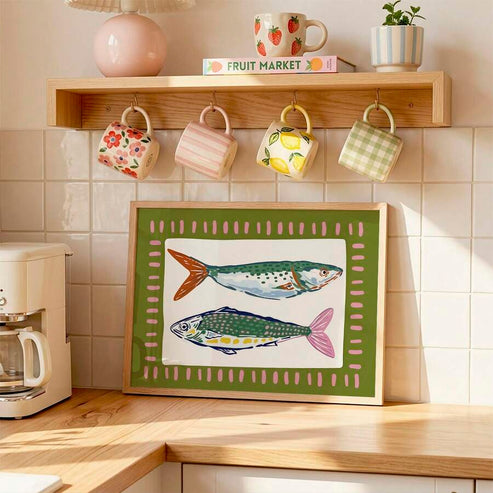
The Colors That Make a Room Feel Mediterranean
You do not need every Mediterranean color in one room. In fact, the most sophisticated spaces usually choose a quiet base and add only a few sunlit accents.
Warm white and sandy beige make a calm foundation. Olive green adds the feeling of Mediterranean vegetation. Blue introduces the sea and sky, while terracotta brings warmth. Lemon yellow is perfect when you want a little more energy.
Where Mediterranean Art Works Best
Mediterranean artwork can change the feeling of different rooms in very different ways.
Living Room
A coastal village or Italian landscape can become the main focal point above a sofa or console. Larger artwork works especially well when the rest of the room is relatively calm.
Bedroom
Choose soft coastal scenes, olive trees or minimalist village sketches. Muted blue, cream and green create a naturally restful combination.
Kitchen
Citrus, vegetables, fruit and vintage still life are natural choices. A small artwork can also create a charming focal point above a breakfast area.
Dining Room
Fruit baskets and still life paintings connect naturally with the idea of Mediterranean meals and gathering around the table.
Entryway
An Italian street scene or architectural artwork can make the first few steps into your home feel like the beginning of a journey.
Reading Corner
Choose one peaceful piece and let it breathe. An olive tree, quiet village or distant coastline can make a small corner feel wonderfully far away.

A beautiful option when you want Mediterranean inspiration to feel connected to everyday city life.
Let the Artwork Become the Place You Dream About
The most meaningful travel inspired artwork is not always the one that represents a place you have already visited.
Sometimes it represents somewhere you miss. Sometimes it represents somewhere you remember from childhood. And sometimes it represents somewhere you have never seen but already feel strangely connected to.
A Mediterranean canvas can hold all of those emotions. A village can remind you of a summer trip. A lemon tree can bring back the feeling of warm weather. An olive tree can represent quiet mornings. A coastal scene can simply become a reminder that there is a beautiful world beyond the walls of home.
For a More Colorful Mediterranean Summer
Mediterranean interiors do not have to stay within the traditional palette of white, blue and beige. Softer pinks, coral, faded green and warm summer tones can create a more contemporary interpretation.

A playful interpretation for bedrooms, creative spaces and homes that prefer a softer summer palette.
A Touch of Retro Italian Coastal Charm
If your home leans toward vintage decor, Mediterranean inspiration can become even more interesting. Think old travel posters, painterly textures, traditional motifs and colors that look as though they have been softened by years of sunlight.

A nostalgic coastal piece that brings an artistic vintage character to Mediterranean inspired rooms.
How to Keep Mediterranean Decor From Feeling Too Themed
The easiest way to make Mediterranean decor feel sophisticated is to avoid decorating every surface with the same idea.
You do not need seashells, anchors, blue stripes and beach signs everywhere. One beautiful coastal artwork can communicate the sea more effectively than a room filled with obvious nautical objects.
Let the artwork do most of the storytelling. Then support it with natural wood, linen, ceramics, plants, warm lighting and a restrained color palette.
The result feels like a real home influenced by the Mediterranean rather than a room designed around a theme.
Let the Artwork Tell Your Own Story
Trends come and go, but the artwork we keep usually has something to do with how it makes us feel.
Maybe the Mediterranean reminds you of a trip you never wanted to end. Maybe you have always dreamed of walking through an Italian coastal village. Maybe you simply want your home to feel brighter, warmer and a little more peaceful.
Choose the artwork that brings that feeling back. It does not have to match every piece of furniture. It only needs to make you pause for a moment when you walk past it.
Mediterranean Wall Art FAQ
What is Mediterranean wall art?
Mediterranean wall art is inspired by coastal landscapes, villages, architecture, olive trees, citrus fruit, food and the relaxed atmosphere associated with Mediterranean living.
What colors work best with Mediterranean wall art?
Warm white, sandy beige, olive green, sea blue, soft blue, terracotta and lemon yellow are especially versatile. You can use just one or two as accents rather than combining every color.
Can Mediterranean art work in a modern home?
Yes. Choose clean coastal landscapes, simple sketches, olive tree artwork or pieces with a restrained palette. Natural wood and warm neutral furniture can help connect the artwork with a modern interior.
Is Mediterranean decor only blue and white?
No. Blue and white are only one interpretation. Mediterranean interiors can also use olive green, terracotta, cream, beige, lemon yellow, coral and warm natural tones.
What Mediterranean artwork is best for a kitchen?
Lemon artwork, fruit baskets, vegetable still life, olive oil themes and vintage food inspired paintings are natural choices for kitchens and dining spaces.
Where should I hang Mediterranean canvas art?
Living rooms, bedrooms, kitchens, dining rooms, entryways and reading corners can all work well. Choose the artwork according to the mood you want to create in that particular room.
How can I add Mediterranean style without redecorating my whole home?
Start with one meaningful piece of Mediterranean wall art. Then repeat one or two colors from the artwork through plants, ceramics, cushions or textiles.
Does Mediterranean art work with farmhouse decor?
Yes. Olive trees, arches, vintage still life and warm coastal landscapes pair naturally with wood, linen, terracotta and rustic materials.
Bring a Little Mediterranean Home
You do not need to live beside the sea to enjoy the feeling of the Mediterranean. Sometimes one canvas is enough to bring a little sunlight, color and memory into an ordinary room.
Explore Canvas Wall Art


